
Your own kundli, freeSign in to keep your birth details, chats and reports in one place.Sign inCreate account
Consult
Free tools
Today’s panchangall five angas with exact timesTithithe lunar day, and when it endsNakshatrathe Moon’s position todayHorathe planetary hour, all twenty-fourRahu Kaalthe time to avoid starting new workChoghadiyaday and night, each split into eightFestivalsDiwali, Holi and 81 more, with the rule behind each dateVratEkadashi with parana, Purnima, Amavasya, Pradosh
More
The Emperor
tarot card meaning
Structure is the answer. Rules, a plan, a person in charge — often you.
IV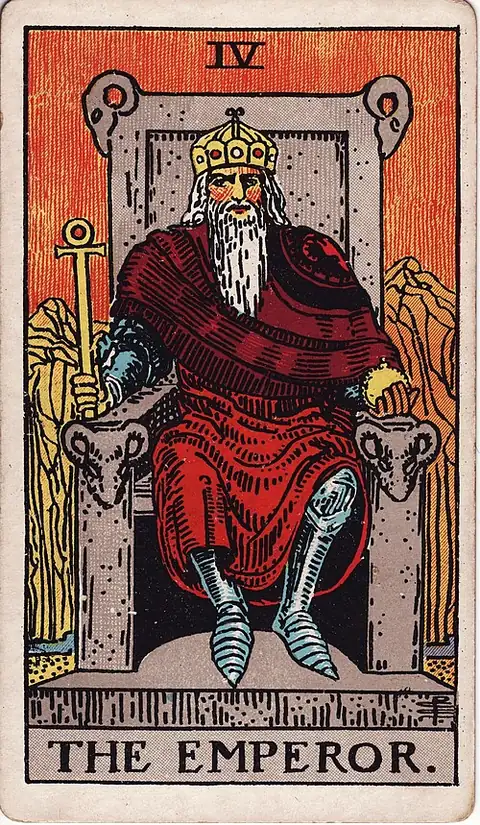 The EmperorAries · Mesh
NumberIV · 4
ElementFire
SignAries · Mesh
What the card shows
A bearded king sits square on a stone throne, wearing armour under his red robe. The rams' heads carved on the throne are the sign of Aries. In one hand he holds a sceptre shaped like an ankh, an old Egyptian symbol of life, and in the other an orb: power over what he rules. The bare red mountains behind him are a hard landscape made orderly by will. Nothing here is soft; everything is firm, planned and in its place.
Upright
orderauthorityboundaries
The Emperor is the card of order and authority. Structure is the answer: a plan, clear rules, a person in charge, and often that person is you. It asks you to take responsibility, set boundaries and make decisions others can rely on. In Indian life it is the head of the family whose word settles things, the senior officer, the parent who built the business, or you stepping into that role. The card favours discipline, written agreements and firm leadership. Protect what you are responsible for, and lead fairly and consistently.
Reversed
rigiditycontrolno spine
Reversed, authority goes wrong. It may be rigid: rules for their own sake, a father figure or boss who will not bend, a household run on fear. Or it may be the opposite: nobody willing to decide, a business drifting because the owner will not take charge. It can also point to your own need to control everything. The card asks you to find firm but fair ground, and to step up where leadership is missing.
The Emperor, area by area
upright and reversedThe Emperor in love and marriage
UprightSingle: someone steady, reliable and possibly older, or a rishta from a well-established family. In a relationship: security and commitment; this person wants to build something lasting. Married: a stable household with clear roles and dependable, day-to-day support. The love here is shown through protection, keeping promises and taking responsibility more than through soft words, and that is worth valuing.
ReversedSingle: a partner who wants control, or family rules that leave you no room to choose. In a relationship: one person dominates every decision. Married: a rigid household, or a partner who avoids taking any responsibility. Pressure from parents who want a say may play a part. Respect has to run both ways, or it is only obedience.
The Emperor: how they feel about you
UprightThey feel protective and serious about you; they want to provide stability and see you as part of their long-term plans.
ReversedThey want control more than closeness, or they are distant and unwilling to commit; either way, they are holding back softness.
The Emperor in career, business and studies
UprightAuthority is available if you claim it. A promotion to a managing role, a senior sarkari post, taking charge of the family business, or setting up your own firm properly. Put terms in writing, set clear systems and lead with discipline. Students: a strict timetable and a structured plan will carry you through the exam.
ReversedA rigid boss, a bureaucracy that will not move, or a business with no clear leadership. You may be clashing with authority, or avoiding responsibility yourself. Find a fair, firm position and put agreements on paper rather than trusting verbal promises.
The Emperor for money and property
UprightPut your money in order: a budget, a plan for the home loan, clear papers for any property. Long-term, disciplined saving does well. Make sure agreements within the family, even with a brother, are documented too.
ReversedPoor financial control, or one person holding all the money without discussion. Disputes over property or inheritance need clear records and fair handling, not force.
Health and family
A steady routine helps: fixed hours for sleep, meals and exercise. Watch the strain of carrying every responsibility alone, and share the load where you can.
Tarot cannot tell you about an illness, a recovery or a pregnancy. For anything about the body, see a doctor.
As advice
Take charge, set clear rules and follow through. Be firm, but let fairness guide the authority you use.
As a person
Responsible, disciplined and protective; a natural leader, often a father figure or a senior; reliable but can be rigid or controlling.
As an outcome
Stability through structure: the matter is settled by a firm decision, a clear plan or someone in authority.
Yes or no
Upright, it leans yes. Reversed, it leans no. This is the leaning the yes or no reading counts.
Timing
The cards do not give dates, and this page will not invent one. When a question is really "when" (a marriage, a job, a move), that is a question for your kundli and the dasha you are running. Make your free kundli.
Where it comes from
The Emperor is given to Aries, the first sign of the zodiac, ruled by Mars in Western astrology. Aries is the leader, the one who starts things and takes charge. That is why the throne carries rams and the card speaks of command and courage. This is the card's symbolism, not your rashi.
With other cards
- The EmpressA balanced home or partnership, with structure and care side by side and neither one crowding out the other.
- JusticeLegal matters, contracts and official decisions; fairness backed by rules, and papers that need to be in order.
- The HierophantTradition and authority together: a formal institution, a government office, or family elders setting the terms.
Read this card with a tarot reader
three who read tarotThe Emperor reads differently in every question. Ask one of these three about the reading you drew it in, or have them draw on your question.
Tap a question and it is asked for you


More from the Major Arcana
the rest of the group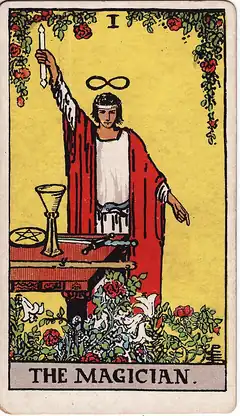
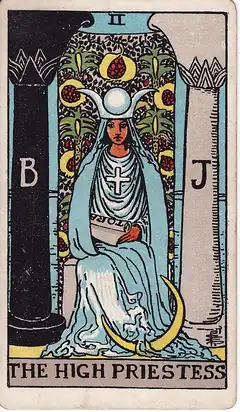
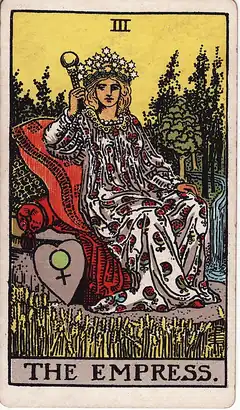
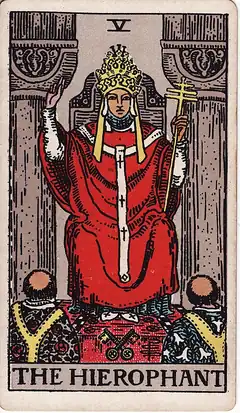

Common questions
4 about this cardIs The Emperor a yes or a no?
Mostly yes. Stability through structure: the matter is settled by a firm decision, a clear plan or someone in authority. Drawn reversed, the answer leans no.
What does The Emperor mean in love?
Someone steady, possibly older. Reliable, not soft.
What does The Emperor mean reversed?
Rules for their own sake, a father figure who will not bend, or nobody willing to decide.
What does The Emperor mean for my career?
Set the terms in writing. Authority is available if you claim it.
A shuffle answers the moment. Your kundli answers the year.
Ask one of 24 AI astrologers about the cards you drew, or about what your own chart says. You pay by the minute.






Chat with an AI astrologer
24 AI astrologers trained in Vedic Jyotish. Chat in any Indian language; call in Hindi and English.Astro VyasaVedic astrology & kundli analysisAstro PremMarriage astrology & kundli matchingAstro KuberWealth & financial astrologyAstro VaidyaHealth & wellness astrologyChat from Call from Billed per minute, only while your chat or call is on. End it any time.