Consult
Free tools
More
Baisakhi 2027
14 April 2027
Vaisakhi: the harvest in Punjab, the Khalsa’s founding, and the solar new year.
- Sun enters Mesh
- 14 Apr, 3:28 PM
- Kept
- that day, even in the evening
- Sun enters Mesh
- 13 Apr, 9:44 PM
- Kept
- that day, even in the evening
Baisakhi in 2026, 2027, 2028
with the moment the Sun entersBaisakhi is Mesh Sankranti, the day the Sun enters sidereal Mesh. The Sun enters at a real minute; in the evening, before midnight, the day is still that day, its punya kaal the afternoon before, and after midnight it is the next. That is why the date can differ by a day between years. Puthandu and Bohag Bihu, on the same Sankranti, follow the month as Tamil Nadu and Assam count it, which begins the next day when the Sun enters after sunset. So in 2028, when the Sun enters on 13 Apr, 9:44 PM, Baisakhi is on 13 April and Puthandu and Bohag Bihu on 14 April.
For New Delhi, in IST.

Why Baisakhi is kept
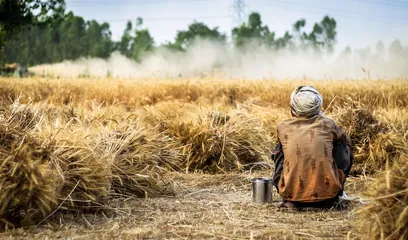
its meaningBaisakhi (Vaisakhi) is Mesh Sankranti kept in Punjab as the solar new year and the wheat harvest festival; farmers give thanks for the rabi crop with bhangra and gidda in the fields, and many bathe in a river or sarovar at dawn to mark the year’s turn. It is counted among Punjab’s biggest melas, with fairs, wrestling and fireworks through the countryside.
For Sikhs the day carries a second, graver meaning: Sikh tradition holds that in 1699 at Anandpur Sahib, Guru Gobind Singh ji founded the Khalsa Panth, baptising the first Panj Pyare with amrit and giving Sikhs the five kakars. Gurdwaras hold Nagar Kirtan and Amrit Sanchar on the day, and many Punjabi Hindu families keep both the harvest and the Khalsa’s founding in mind on Baisakhi.
Puja vidhi
step by step- 1River or home bath
Bathe at dawn in a river or sarovar if you can, or at home, as a cleansing for the new year.
- 2Harvest thanksgiving
Offer a small puja of thanks for the wheat crop, placing the first grain before the family deity or on the earth itself.
- 3Nagar Kirtan
Where a gurdwara holds a Nagar Kirtan, with the Panj Pyare leading the Guru Granth Sahib through town, join it if you are able; many Hindu neighbours do too.
- 4Visit the mela
Village melas with bhangra, gidda and wrestling mark the harvest; visiting one is as much the custom as any formal puja.
- 5Give in charity
Set aside a share of the new grain or food for those in need, as the first thanksgiving of the harvest.
- 6Festive meal
Share a festive Punjabi meal with the family, often with the new season’s wheat.
Puja samagri
keep it ready the day before- Fresh wheat stalks or grain
- Water for the river or home bath
- Roli and akshat for the thanksgiving puja
- Grain or food set aside for charity
- Festive food for the family meal
The katha of Baisakhi
Source: The harvest: popular tradition of Punjab. The Khalsa’s founding: Sikh tradition
Popular tradition in Punjab holds Baisakhi as the moment the ripened rabi wheat is finally ready to cut, a relief and a joy after a full season’s work, which farmers mark by dancing bhangra in the fields themselves, not only at a later mela.
Sikh tradition holds that on this day in 1699, Guru Gobind Singh ji called the sangat at Anandpur Sahib and asked for a head in the name of faith; five men came forward one by one, the Panj Pyare, and were baptised with amrit to form the Khalsa, given the five kakars and the surname Singh and Kaur. The Khalsa’s founding on Baisakhi is why the day holds its second, graver meaning for Sikhs everywhere.
What to do, and what to avoid
What to do
- Join the Nagar Kirtan or a village mela if your area holds one, as neighbours of every faith often do together in Punjab.
- Set aside a share of the new grain for charity before using the rest, as the harvest’s own first thanksgiving.
What to avoid
- Tobacco and alcohol are kept away from a gurdwara visit or Nagar Kirtan, by the gurdwara’s own custom.
Regional names, and why dates differ
The same Mesh Sankranti is kept, under other names, as Puthandu in Tamil Nadu, Bohag Bihu in Assam and, a day later at sunrise, Vishu in Kerala; in Bengal and Odisha it falls as Poila Boishakh and Pana Sankranti. Each region keeps its own custom on the same solar turn of the year.
Coming festivals
the next sixCommon questions
5 questionsWhen is Baisakhi in 2027?
Baisakhi 2027 is on Wednesday, 14 April 2027, in New Delhi. Pick your city at the top for your own date and times.
What time does the Sun enter Mesh in 2027?
At 14 Apr, 3:28 PM IST.
When is Baisakhi in 2026?
Tuesday, 14 April 2026, in New Delhi.
When is Baisakhi in 2028?
Thursday, 13 April 2028, in New Delhi.
Why is Baisakhi on a different day in the US or UK?
Baisakhi follows the moment the Sun enters Mesh, one instant all over the world. When it enters in the evening, before midnight, the festival stays on that day; after midnight it is the next day. But the clock in the US or UK is hours behind India’s, so there that instant can still be the day before, or come before the evening, and the festival can be a day earlier. Pick your city in the box at the top and every date and time on this page is worked out for it.
A festival is the same day for everybody. Your chart is not.
Make your free kundli, or ask any of 24 astrologers what this year holds for you. You pay by the minute.





Chat with an AI astrologer
24 AI astrologers trained in Vedic Jyotish. Chat in any Indian language; call in Hindi and English.Astro VyasaVedic astrology & kundli analysisAstro PremMarriage astrology & kundli matchingAstro KuberWealth & financial astrologyAstro VaidyaHealth & wellness astrologyChat from Call from Billed per minute, only while your chat or call is on. End it any time.