Sakat Chauth 2027
25 January 2027
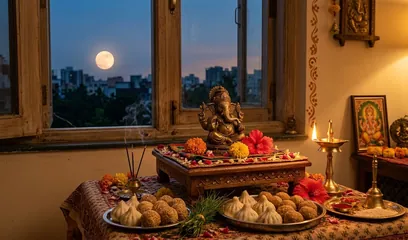
Sankashti Chaturthi of Magha, kept for Ganesha and broken at moonrise.
- Chaturthi begins
- 25 Jan, 8:10 AM
- Chaturthi ends
- 26 Jan, 6:00 AM
- Moonrise in New Delhi
- 9:16 PM
- Kept
- in the evening, up to moonrise, when the fast is broken
- Chaturthi begins
- 14 Jan, 11:17 PM
- Chaturthi ends
- 15 Jan, 8:10 PM
- Moonrise in New Delhi
- 9:35 PM
- Kept
- in the evening, up to moonrise, when the fast is broken
Sakat Chauth in 2026, 2027, 2028
with the tithi’s timesSakat Chauth is Magh Krishna Chaturthi, the Chaturthi of the krishna paksha of Magh, so its date is the day on which this tithi is running in the evening, up to moonrise. A tithi begins and ends at a real minute, not at midnight, which is why the moment decides the day, and why the same festival can fall on a different date in another country.
For New Delhi, in IST.

Why Sakat Chauth is kept
its meaningSakat Chauth, also called Til Chauth or Tilkuta Chauth, is Magh Krishna Chaturthi, a day many mothers keep as a vrat for their children’s long life and wellbeing, worshipping Ganesh in his form as Sakat (or Vinayak) Chauth. The fast is broken only after the moon is sighted in the evening, which is why the moonrise time matters as much as the tithi itself.
Til and gud are at the heart of the day’s puja and its food: tilkut, til ke laddoo and gud are offered to Ganesh before the family eats them as prasad, and the day falls in Magh, the month tradition holds sesame to be at its most wholesome. The katha read on this day, as Vrat katha commonly tells it, carries a potter’s family through a hardship resolved only by faith in Ganesh.
Puja vidhi
step by step- 1Keep the vrat
Keep the vrat through the day, on phalahar or water if your health allows, with a sankalp taken in the morning before Ganesh.
- 2Set up the puja
In the evening, set up Ganesh’s picture or idol on a clean chowki, with til, gud and tilkut kept ready before him.
- 3Worship Ganesh
Worship Ganesh with roli, akshat, durva grass and flowers, and offer tilkut, til ke laddoo and gud as bhog, since these two are at the heart of this vrat’s own offering.
- 4Hear the katha
Read or hear the Sakat Chauth katha with the family, as your household’s own version of the story is told.
- 5Arghya to the moon
At moonrise, offer arghya to Chandra with water, til and akshat, then look at the moon before breaking the fast.
- 6Break the vrat
Break the vrat with the tilkut and gud offered to Ganesh, and share the prasad with the rest of the family.
Puja samagri
keep it ready the day before- Ganesh idol or picture
- Til (sesame)
- Gud (jaggery) and tilkut
- Durva grass
- Roli and akshat
- Flowers
- Lota of water for arghya
- Diya and ghee
The katha of Sakat Chauth
Source: Vrat katha as commonly read in homes that keep Sakat Chauth
The katha commonly read on this day tells of a potter whose pots kept breaking in the kiln however carefully he made them, leaving his family in want. Advised to offer the first lump of clay to Ganesh before lighting the kiln and to keep the Sakat Chauth vrat with faith, he did as he was told.
From that firing on, his pots came out of the kiln whole, and his family’s hardship lifted. The story is told to mothers and children on this day as a lesson that an offering made with faith, however small, is answered, which is why mothers above all keep this vrat for their children’s sake.
What to do, and what to avoid
What to do
- Check the moonrise time for your own city before planning the evening puja, since the fast is broken only after the moon is seen.
- Keep the katha for the family to hear together in the evening, since it is a story told to be shared, not read alone.
- If you are unwell, pregnant or nursing, it is common for elders to allow water or fruit through the day; the vrat is kept in the bhav, and your health comes first.
What to avoid
- Avoid eating til or gud before they are offered to Ganesh in the evening puja.
- Many mothers avoid starting the fast without the morning sankalp; keep that small step even on a busy day, since it marks the vrat’s beginning.
Regional names, and why dates differ
Sakat Chauth is kept mainly in Uttar Pradesh, Bihar, Madhya Pradesh and Rajasthan, and is also called Til Chauth, Tilkuta Chauth or Maghi Chauth in different homes; in some of these it falls near, or is combined with, the monthly Sankashti Chaturthi kept for Ganesh.
The day is read by the Chaturthi running at moonrise, so the date can shift between cities and years depending on when the tithi and the local moonrise line up, the way any moonrise-based festival does.
Common questions
5 questionsWhen is Sakat Chauth in 2027?
Sakat Chauth 2027 is on Monday, 25 January 2027, in New Delhi. Pick your city at the top for your own date and times.
What time does Chaturthi begin and end for Sakat Chauth 2027?
In IST, Chaturthi begins on 25 Jan, 8:10 AM and ends on 26 Jan, 6:00 AM. Sakat Chauth is kept in the evening, up to moonrise, when the fast is broken, which is why it falls on 25 January.
When is Sakat Chauth in 2026?
Tuesday, 6 January 2026, in New Delhi.
When is Sakat Chauth in 2028?
Saturday, 15 January 2028, in New Delhi.
Why is Sakat Chauth on a different day in the US or UK?
Sakat Chauth is kept on the day its tithi, Chaturthi, is running in the evening, up to moonrise. The tithi begins and ends at the same instant all over the world, but sunset comes at its own hour in every place, so in the US or UK the day that holds it can be a day earlier than in India. Pick your city in the box at the top and every date and time on this page is worked out for it.
A festival is the same day for everybody. Your chart is not.
Make your free kundli, or ask any of 24 astrologers what this year holds for you. You pay by the minute.






Chat with an AI astrologer
24 AI astrologers trained in Vedic Jyotish. Chat in any Indian language; call in Hindi and English.Astro VyasaVedic JyotishAstro PremLove & RelationshipAstro KuberWealth & FinanceAstro VaidyaHealth & VitalityChat from Call from Billed per minute, only while your chat or call is on. End it any time.