Maha Shivaratri 2027
6 March 2027
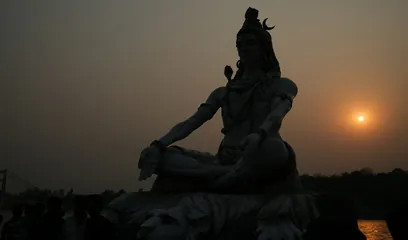
The great night of Shiva. Kept at nishita, the midnight watch, which is why it can fall a day earlier than a sunrise reading suggests.
- Chaturdashi begins
- 6 Mar, 12:04 PM
- Chaturdashi ends
- 7 Mar, 1:46 PM
- Nishita Kaal puja
- 12:08 AM – 12:57 AM, 7 Mar
- First prahar puja
- 6:24 PM – 9:28 PM
- Second prahar puja
- 9:28 PM – 12:32 AM, the night of 6–7 Mar
- Third prahar puja
- 12:32 AM – 3:36 AM, 7 Mar
- Fourth prahar puja
- 3:36 AM – 6:40 AM, 7 Mar
- Parana, the fast broken
- 6:40 AM – 1:46 PM, 7 Mar
- Kept
- at midnight (nishita)
- Chaturdashi begins
- 23 Feb, 10:44 AM
- Chaturdashi ends
- 24 Feb, 1:27 PM
- Nishita Kaal puja
- 12:09 AM – 12:59 AM, 24 Feb
- First prahar puja
- 6:17 PM – 9:26 PM
- Second prahar puja
- 9:26 PM – 12:34 AM, the night of 23–24 Feb
- Third prahar puja
- 12:34 AM – 3:43 AM, 24 Feb
- Fourth prahar puja
- 3:43 AM – 6:52 AM, 24 Feb
- Parana, the fast broken
- 6:52 AM – 1:27 PM, 24 Feb
- Kept
- at midnight (nishita)
Maha Shivaratri in 2026, 2027, 2028
with the tithi’s timesMaha Shivaratri is Phalgun Krishna Chaturdashi, the Chaturdashi of the krishna paksha of Phalgun, so its date is the day on which this tithi is running at midnight. A tithi begins and ends at a real minute, not at midnight, which is why the moment decides the day, and why the same festival can fall on a different date in another country.
For New Delhi, in IST.
Nishita Kaal puja in your city
Maha Shivaratri 2027, forty citiesWhy Maha Shivaratri is kept
its meaningMaha Shivaratri is Phalgun Krishna Chaturdashi, kept at nishita, the depth of night, the one night of the year tradition holds most sacred to Shiva. Devotees keep a nirjala or phalahar vrat through the day and a night-long jagran, worshipping Shiva through all four prahars of the night with abhishek of his linga, rather than sleeping through the hours tradition asks be spent awake.
The Shiva Purana tells that on this night, during the samudra manthan, the churning of the ocean, a deadly poison, halahala, rose before the nectar did, threatening to destroy the three worlds, and Shiva drank it to save creation, holding it in his throat rather than swallowing it, which turned his throat blue and gave him the name Neelkanth. Many also keep this night as the one of Shiva and Parvati’s wedding, and a hunter’s katha, commonly read on this night, tells how an act done without any intention of worship was still enough to win Shiva’s grace.
Puja vidhi
step by step- 1Keep the vrat
Keep the vrat through the day on phalahar or water, with a sankalp taken before Shiva in the morning, ahead of the night’s longer puja.
- 2Panchamrit abhishek
In the evening, bathe the Shiva linga with water, then with milk, curd, honey, ghee and sugar in turn, before a plain water bath again.
- 3Offer bael leaves
Offer bael (bilva) leaves, three to a stem, along with dhatura, akshat and white flowers, since tradition holds these dearest to Shiva.
- 4Four-prahar puja
Keep jagran through the night if you can, worshipping in each of the four prahars with a fresh abhishek and aarti, reciting “Om Namah Shivaya” or the Rudrashtakam.
- 5Hear the katha
Read or hear the night’s katha, whether the Samudra Manthan story of Neelkanth or the hunter’s tale, as your family’s own custom is.
- 6Break the vrat
Break the vrat the next morning after the final prahar’s puja, with prasad shared among the family, closing the night’s long worship.
Puja samagri
keep it ready the day before- Shiva linga or picture
- Milk, curd, honey, ghee and sugar for panchamrit
- Bael (bilva) leaves
- Dhatura flower
- White flowers and akshat
- Water for abhishek
- Diya and incense
The katha of Maha Shivaratri
Source: Neelkanth: Shiva Purana, the samudra manthan. The hunter: Vrat katha as commonly read on this night
When the devas and asuras churned the ocean for amrit, the poison halahala rose first, spreading fear through the three worlds, as the Shiva Purana tells. The other gods turned to Shiva, and he drank the poison to save creation, but held it in his throat instead of swallowing it, so it neither entered his body nor was spat back into the world; this is why he is called Neelkanth, the blue-throated one, and this night is kept awake in memory of that night’s churning.
A widely read vrat katha tells of a hunter who, caught out in the forest after dark on this night and chased up a tree by a tiger, spent the night plucking leaves and dropping them to keep himself awake and alert. Beneath him, without his knowing, stood a Shiva linga, and each leaf he dropped happened to be a bael leaf falling on it, along with drops of water from his water-skin.
At each of the four parts of that long night, his unknowing offering of bael leaves and water was complete, and by dawn Shiva, pleased with devotion given even without intention, spared the hunter and his family hardship from then on. The story is told to show that Shiva’s grace reaches whoever keeps this night’s vigil, however it is kept.
What to do, and what to avoid
What to do
- Keep the night’s four-prahar puja even if you cannot manage all of them; many people choose the prahar nearest midnight if a full night’s jagran is hard to keep.
- Use bael leaves with the smooth side facing the linga, three leaves to a stem if you can find them, since tradition holds this the form dearest to Shiva.
- If you are elderly, unwell, pregnant or nursing, it is common to keep the vrat on fruit and milk rather than going without food or water, and to follow a doctor’s advice on a night-long fast.
What to avoid
- Avoid breaking the vrat before the final prahar’s puja is done, if you are keeping the fast through the night.
- Many devotees avoid tulsi in Shiva’s offerings, since tradition keeps tulsi for Vishnu’s worship and bael for Shiva’s.
Regional names, and why dates differ
Maha Shivaratri is kept at Shiva temples across the country with particular grandeur at Kashi, Ujjain’s Mahakaleshwar and the other jyotirlingas, where the night draws some of the year’s largest crowds; some communities also mark it with folk fairs and all-night bhajans beyond the temple puja itself.
The day is read by the Chaturdashi running at nishita, midnight, so its date can differ by a day between cities and countries when the tithi changes close to that hour, the same rule that moves any midnight-based festival.
Common questions
6 questionsWhen is Maha Shivaratri in 2027?
Maha Shivaratri 2027 is on Saturday, 6 March 2027, in New Delhi. Pick your city at the top for your own date and times.
What is the Maha Shivaratri puja time in 2027?
In New Delhi, the Nishita Kaal puja is 12:08 AM to 12:57 AM, 7 Mar, the hour of the night in which Shiva is said to have appeared as the linga. Families who worship through the night do it in four prahars, from sunset at 6:24 PM to sunrise at 6:40 AM, 7 Mar. The fast is broken (parana) from 6:40 AM to 1:46 PM, 7 Mar, while Chaturdashi still holds.
What time does Chaturdashi begin and end for Maha Shivaratri 2027?
In IST, Chaturdashi begins on 6 Mar, 12:04 PM and ends on 7 Mar, 1:46 PM. Maha Shivaratri is kept at midnight (nishita), which is why it falls on 6 March.
When is Maha Shivaratri in 2026?
Sunday, 15 February 2026, in New Delhi.
When is Maha Shivaratri in 2028?
Wednesday, 23 February 2028, in New Delhi.
Why is Maha Shivaratri on a different day in the US or UK?
Maha Shivaratri is kept on the day its tithi, Chaturdashi, is running at midnight. The tithi begins and ends at the same instant all over the world, but midnight comes at its own hour in every place, so in the US or UK the day that holds it can be a day earlier than in India. Pick your city in the box at the top and every date and time on this page is worked out for it.
A festival is the same day for everybody. Your chart is not.
Make your free kundli, or ask any of 24 astrologers what this year holds for you. You pay by the minute.





Chat with an AI astrologer
24 AI astrologers trained in Vedic Jyotish. Chat in any Indian language; call in Hindi and English.Astro VyasaVedic JyotishAstro PremLove & RelationshipAstro KuberWealth & FinanceAstro VaidyaHealth & VitalityChat from Call from Billed per minute, only while your chat or call is on. End it any time.